The Complete Australian First Home Buyers Guide 2026
Everything you need to buy your first home in Australia. Help to Buy explained, state-by-state grants comparison, FHSS strategies, deposit options, common mistakes to avoid, and a month-by-month buying timeline.

This guide is general information only - not credit, financial, or legal advice - and does not take your circumstances into account. For help tailored to your situation, submit an enquiry and our accredited Australian Credit Licensed broker partner can assist under their licence.
In this guide
- 01 How do I buy my first home in 2026?
- 02 What is the Help to Buy scheme?
- 03 Government grants & schemes by state
- 04 First Home Super Saver Scheme (FHSS)
- 05 How to stack schemes together
- 06 How much deposit do I need?
- 07 Biggest mistakes to avoid
- 08 Buying as a single person
- 09 Buying with friends or family
- 10 City vs. regional areas
- 11 Step-by-step buying timeline
- 12 Frequently asked questions
How Do I Buy My First Home in Australia in 2026?
2026 is one of the best years to buy your first home in Australia thanks to unprecedented government support. The Help to Buy shared equity scheme (launched December 2025), unlimited First Home Buyer Guarantee places, and state grants worth up to $50,000 mean first home buyers have never had more assistance available.
Buying your first home involves five key stages: getting your finances in order, applying for government schemes, securing pre-approval, finding and purchasing a property, and completing settlement. The process typically takes 6-12 months from start to finish, though preparation can begin years earlier with strategies like the First Home Super Saver Scheme (FHSS).
Government Support
Up to $50,000 in grants plus shared equity, LMI waivers, and stamp duty exemptions. More support than ever before.
Low Deposit Options
Buy with as little as 2% deposit through Help to Buy or 5% through FHBG - no LMI required on either scheme.
Stackable Benefits
Combine FHOG + FHSS + FHBG/Help to Buy + stamp duty exemptions for maximum savings in every state.
What Is the Help to Buy Scheme and How Does It Work?
The biggest change for first home buyers since the FHOG. Launched December 2025 and now operating at scale across all states (refer to Housing Australia for current participant numbers).
Help to Buy is a federal shared equity scheme where the government contributes up to 40% of a new home's purchase price or 30% of an existing home's price. You need just a 2% deposit and take out a smaller mortgage for the remaining balance, dramatically reducing your repayments and the deposit required to enter the market.
Eligibility requirements
Income caps
- Singles: $100,000 taxable income
- Couples: $160,000 combined taxable income
- Based on most recent ATO assessment
- Australian citizen aged 18+
- Must not currently own property
How the equity share works
- No rent or interest on the govt's share
- Buy back in 5% increments anytime
- Govt share based on current market value
- Must repay share if you sell
- Must be owner-occupied
Property price caps by capital city
Sydney
Melbourne
Brisbane
Perth
Adelaide
Hobart
Canberra
Darwin
Worked example - Help to Buy on a $700,000 new home: On a $700,000 new home, the government contributes $280,000 (40%). You need a $14,000 deposit (2%) and a mortgage of $406,000 instead of $686,000. At today's lowest FHB rate of 6.29% over 30 years, monthly repayments drop from $4,242 to $2,510 - saving you $1,732 per month or $20,784 per year. Compare current first home buyer rates.
What Government Grants and Schemes Can I Access?
Every state offers different grants, stamp duty concessions, and scheme eligibility. This is the most comprehensive state-by-state comparison available.
State-by-state comparison
| State | FHOG Amount | FHOG Cap | Stamp Duty Concession | New vs Established | Help to Buy Cap |
|---|---|---|---|---|---|
| NSW | $10,000 | $600,000 | Exempt up to $800k; concessional to $1M | New only (FHOG) | $950,000 |
| VIC | $10,000 | $750,000 | Exempt up to $600k; concessional to $750k | New only (FHOG) | $850,000 |
| QLD | $30,000 | $750,000 | Concession up to $700k | New only (FHOG) | $750,000 |
| WA | $10,000 | $750,000 | Exempt up to $430k; concessional to $530k | New only (FHOG) | $700,000 |
| SA | $15,000 | $650,000 | No duty up to $650k for FHBs | New only (FHOG) | $650,000 |
| TAS | $30,000 | $600,000 | 50% duty discount up to $600k | New only (FHOG) | $650,000 |
| ACT | Nil (abolished) | N/A | Full exemption up to $1M (income tested) | N/A | $750,000 |
| NT | $50,000 (new) / $10,000 (est.) | No cap | $18,601 discount established; full on new | Both new & established | $600,000 |
NSW
$10,000- FHOG cap
- $600,000
- Stamp duty
- Exempt up to $800k; concessional to $1M
- Eligibility
- New only
- Help to Buy cap
- $950,000
VIC
$10,000- FHOG cap
- $750,000
- Stamp duty
- Exempt up to $600k; concessional to $750k
- Eligibility
- New only
- Help to Buy cap
- $850,000
QLD
$30,000- FHOG cap
- $750,000
- Stamp duty
- Concession up to $700k
- Eligibility
- New only
- Help to Buy cap
- $750,000
WA
$10,000- FHOG cap
- $750,000
- Stamp duty
- Exempt up to $430k; concessional to $530k
- Eligibility
- New only
- Help to Buy cap
- $700,000
SA
$15,000- FHOG cap
- $650,000
- Stamp duty
- No duty up to $650k
- Eligibility
- New only
- Help to Buy cap
- $650,000
TAS
$30,000- FHOG cap
- $600,000
- Stamp duty
- 50% discount up to $600k
- Eligibility
- New only
- Help to Buy cap
- $650,000
ACT
Nil- FHOG cap
- N/A
- Stamp duty
- Full exemption up to $1M (income tested)
- Eligibility
- N/A
- Help to Buy cap
- $750,000
NT
$50K new / $10K est.- FHOG cap
- No cap
- Stamp duty
- $18,601 discount est.; full on new
- Eligibility
- Both
- Help to Buy cap
- $600,000
How Does the First Home Super Saver Scheme (FHSS) Work?
The most tax-efficient way to save for a deposit. Contribute to super at 15% tax instead of your marginal rate, then withdraw for your home purchase.
The FHSS lets you make voluntary super contributions of up to $15,000 per year (and $50,000 lifetime) that are taxed at just 15% instead of your marginal rate. When you are ready to buy, you request a release from the ATO and the funds become your deposit. It is the single most tax-effective strategy for building a deposit in Australia.
Salary sacrifice vs. personal contribution
Salary sacrifice
Your employer deducts the amount pre-tax. You pay 15% contributions tax instead of your marginal rate. Best for PAYG employees.
On $80K salary, $15K sacrifice saves ~$4,125 in tax per year vs. saving from after-tax income.
Personal contribution + tax deduction
Contribute from your bank account, then claim a tax deduction at tax time. Same net outcome. Better for self-employed or contractors.
Submit a Notice of Intent to claim the deduction before requesting release.
Worked example - 3 years of FHSS contributions at $80,000 salary: Contributing $15,000/year for 3 years via salary sacrifice at an $80,000 salary: $45,000 contributed, taxed at 15% = $6,750 in contributions tax. Net amount in super: ~$38,250. With deemed earnings (~3.5% return), total available for withdrawal: approximately $48,000-$50,000. Tax saved over 3 years compared to saving from after-tax income: approximately $12,375.
Key timing tips
- 1. Start FHSS as early as possible - ideally 3 years before you plan to buy.
- 2. Request a determination from the ATO before requesting release - this shows how much you can withdraw.
- 3. Allow 20+ business days for the ATO to process your release request.
- 4. You must sign a contract to purchase within 12 months of release (or request an extension).
- 5. Lodge your Notice of Intent to claim deduction before requesting the release if using personal contributions.
How Much Government Help Can I Stack Together?
The real power is in combining schemes. Here is the maximum benefit available in each state for a new home purchase.
You can stack the FHOG, FHSS, FHBG or Help to Buy, and stamp duty exemptions simultaneously. The combination can reduce your entry costs by $50,000-$100,000+ depending on your state, property price, and which schemes you qualify for.
| State | FHOG | Stamp Duty Saved | LMI Saved (FHBG) | FHSS (3 yrs) | Total Benefit |
|---|---|---|---|---|---|
| QLD | $30,000 | ~$15,925 | ~$25,000 | ~$12,375 | ~$83,300 |
| TAS | $30,000 | ~$8,000 | ~$15,000 | ~$12,375 | ~$65,375 |
| NT | $50,000 | Full exemption | ~$12,000 | ~$12,375 | ~$74,375+ |
| NSW | $10,000 | ~$31,000 | ~$35,000 | ~$12,375 | ~$88,375 |
| VIC | $10,000 | ~$22,000 | ~$30,000 | ~$12,375 | ~$74,375 |
QLD
~$83,300- FHOG
- $30,000
- Stamp duty saved
- ~$15,925
- LMI saved (FHBG)
- ~$25,000
- FHSS tax savings
- ~$12,375
TAS
~$65,375- FHOG
- $30,000
- Stamp duty saved
- ~$8,000
- LMI saved (FHBG)
- ~$15,000
- FHSS tax savings
- ~$12,375
NT
~$74,375+- FHOG
- $50,000
- Stamp duty saved
- Full exemption
- LMI saved (FHBG)
- ~$12,000
- FHSS tax savings
- ~$12,375
NSW
~$88,375- FHOG
- $10,000
- Stamp duty saved
- ~$31,000
- LMI saved (FHBG)
- ~$35,000
- FHSS tax savings
- ~$12,375
VIC
~$74,375- FHOG
- $10,000
- Stamp duty saved
- ~$22,000
- LMI saved (FHBG)
- ~$30,000
- FHSS tax savings
- ~$12,375
First Home Buyer Calculators
Estimate your borrowing power and how long it will take to save your deposit.
Borrowing Power Calculator
Estimated borrowing power
This is an estimate only. Actual borrowing capacity depends on the lender’s assessment criteria, credit history, and living expenses.
Deposit Savings Calculator
Results
Assumes a 20% deposit target. With the FHBG you may only need 5%. Excludes stamp duty and other purchase costs.
We compare Australia's leading first home buyer lenders
(across the First Home Guarantee panel and beyond)











Ready to take the first step?
Compare first home buyer loan rates from 30+ lenders. 100% free, no credit score impact.
How Much Do I Need for a Deposit in 2026?
The traditional 20% deposit is no longer the only option. Government schemes let you buy with as little as 2%.
Your deposit amount depends on which scheme you use. Help to Buy requires just 2%, the FHBG requires 5% with no LMI, and buying without schemes typically needs 5-20%. A 20% deposit avoids LMI entirely, but government guarantees can eliminate LMI at lower deposit levels.
| Deposit | On $700K | LMI Required? | Scheme Required | LMI Cost |
|---|---|---|---|---|
| 2% | $14,000 | No | Help to Buy | $0 |
| 5% | $35,000 | No | FHBG | $0 |
| 5% (no scheme) | $35,000 | Yes | None | ~$28,000-$35,000 |
| 10% | $70,000 | Yes | None | ~$12,000-$18,000 |
| 20% | $140,000 | No | None | $0 |
2% deposit
$14,000- LMI required?
- No
- Scheme needed
- Help to Buy
- LMI cost
- $0
5% deposit
$35,000- LMI required?
- No
- Scheme needed
- FHBG
- LMI cost
- $0
5% (no scheme) deposit
$35,000- LMI required?
- Yes
- Scheme needed
- None
- LMI cost
- ~$28K-$35K
10% deposit
$70,000- LMI required?
- Yes
- Scheme needed
- None
- LMI cost
- ~$12K-$18K
20% deposit
$140,000- LMI required?
- No
- Scheme needed
- None
- LMI cost
- $0
What Are the Biggest Mistakes First Home Buyers Make?
2026-specific pitfalls that can cost you thousands or delay your purchase by months.
The most expensive mistakes are not applying for government schemes early enough, carrying BNPL debt that reduces borrowing capacity, underestimating total costs beyond the mortgage, and choosing the wrong scheme for your situation. Avoid these and you could save $20,000-$50,000.
Not applying for schemes early
Help to Buy and FHBG applications take 2-4 weeks. FHSS withdrawal takes 20+ business days. Start months before you plan to buy, not when you find a property.
BNPL & Afterpay debt
Even $500 in Afterpay can reduce borrowing capacity by $5,000-$10,000. Close all BNPL accounts at least 3 months before applying for a home loan.
Underestimating total costs
Beyond the deposit, budget $5,000-$15,000 for stamp duty (if not exempt), conveyancing, inspections, and moving. Plus 3 months of repayments as an emergency buffer.
Ignoring HECS/HELP impact
A $40,000 HELP debt reduces borrowing capacity by $30,000-$50,000. Consider voluntary repayments before applying if your debt is high relative to income.
Not getting pre-approval first
Searching without pre-approval wastes time and risks losing properties. Pre-approval confirms your budget and strengthens your negotiating position with agents.
Choosing the wrong scheme
FHBG (5% deposit, you own 100%) vs Help to Buy (2% deposit, govt owns 30-40%). Consider your income trajectory - if you expect higher earnings, FHBG gives full ownership from day one.
Can I Buy My First Home as a Single Person?
Absolutely. Singles access all the same schemes and grants as couples - and some strategies work even better for single buyers.
Single buyers can access FHBG, Help to Buy ($100,000 income cap for singles), FHOG, FHSS, and all stamp duty concessions. Focus on units, townhouses, or properties in growth corridors where prices suit single incomes. With Help to Buy, a single earning $90,000 could purchase a $650,000 property with just $13,000 down.
Best strategies for single buyers
- 1. Start FHSS early - 3 years of $15,000 contributions builds a ~$48,000 deposit on a single income.
- 2. Use Help to Buy - the $100K income cap for singles is generous and the 2% deposit makes entry accessible.
- 3. Consider units and townhouses - lower entry prices, often in better locations, and easier to maintain solo.
- 4. Look at growth corridors - suburbs 20-40km from CBD with planned infrastructure offer affordability plus capital growth.
- 5. Budget conservatively - ensure repayments are under 30% of your take-home pay to maintain financial flexibility.
Single buyer example - Brisbane unit: A single buyer earning $85,000 purchases a $550,000 new unit in Brisbane. Using Help to Buy (40% = $220,000 govt share): deposit of $11,000 (2%), mortgage of $319,000. Monthly repayments: ~$1,912 (30% of take-home pay). Plus $30,000 QLD FHOG and stamp duty concession. Total out-of-pocket to enter: approximately $11,000 + $3,000 costs = $14,000.
Can I Buy a Home with Friends or Family?
Co-buying is increasingly popular as prices rise. Here is how to do it safely with proper legal structures.
Co-buying lets you combine incomes and deposits to access higher-priced properties or better locations. You can purchase as tenants in common (unequal shares) or joint tenants (equal shares). A co-ownership agreement is essential to protect all parties. Note that some government schemes require all applicants to be first home buyers.
Tenants in common
- Unequal ownership splits (e.g., 60/40)
- Each party can sell their share independently
- Share passes to estate on death
- Best for unequal financial contributions
Joint tenancy
- Equal ownership (50/50 for two parties)
- Right of survivorship (auto-transfers on death)
- Cannot sell share without converting to TiC
- Best for partners or equal contributors
Essential co-ownership agreement items
- 01
Ownership percentages
How much each party owns and what each contributed at purchase.
- 02
Cost-sharing split
How mortgage repayments, rates and maintenance are split month to month.
- 03
Exit strategy
What happens if one party wants to sell or buy the other out.
- 04
Dispute resolution
The process for handling disagreements before they escalate.
- 05
Hardship & default
What happens if one party can't meet their financial obligations.
Should I Buy in the City or a Regional Area?
Regional areas offer significantly lower entry prices plus access to the Regional First Home Buyer Guarantee. But consider job markets and growth prospects.
Regional median house prices are 30-50% below capital city prices in most states. Combined with the Regional First Home Buyer Guarantee (5% deposit, no LMI) and stronger FHOG amounts in some areas, regional buying can cut your entry costs dramatically. The trade-off is fewer job opportunities and potentially slower capital growth.
Reasons to buy regional
- 30-50% lower property prices
- Regional FHBG eligibility
- Higher FHOG amounts in some states
- Lower ongoing living costs
- Lifestyle benefits (space, nature)
- Strong growth in sea-change/tree-change areas
Things to consider
- Smaller job markets - remote work helps
- Potentially slower capital growth
- Fewer services and amenities
- Higher property insurance in some areas
- Harder to resell in some locations
- Research infrastructure plans before buying
Step-by-Step: Your First Home Buying Timeline
A month-by-month planner from initial preparation to getting your keys.
A typical timeline starts 12 months before a planned purchase. Common steps include FHSS contributions and credit score cleanup early on, scheme applications around 6 months, and pre-approval at the 3-month mark. Many buyers reach settlement within a year of starting.
- 12m
12 months out - Prepare your finances
- Start FHSS contributions ($15,000/year via salary sacrifice)
- Check and improve your credit score (request free report from Equifax/Illion)
- Close unused credit cards, BNPL accounts, and small loans
- Build a consistent savings pattern (lenders love 3+ months of regular saving)
- Reduce discretionary spending to increase saving rate
- 6m
6 months out - Apply for schemes & pre-approval
- Apply for FHBG or Help to Buy through a participating lender
- Apply for your state's FHOG (can sometimes be done at settlement)
- Request your FHSS determination from the ATO
- Get pre-approval from 1-2 lenders via find.deals™
- Engage a conveyancer/solicitor ($1,500-$3,000)
- 3m
3 months out - Property search
- Request FHSS release from the ATO (allow 20+ business days)
- Start attending open inspections within your budget
- Research suburbs: transport, schools, growth plans, comparable sales
- Engage a buyer's agent if budget allows ($5,000-$15,000)
- Understand auction vs. private sale processes in your state
- 1m
1 month out - Make an offer
- Arrange building and pest inspection ($500-$800)
- Submit your offer or bid at auction
- Exchange contracts and pay holding deposit (0.25% in NSW)
- Submit contract to lender for unconditional approval
- Lender arranges property valuation
- ✓
Settlement - Get your keys!
- Settlement occurs 4-6 weeks after exchange (your conveyancer handles this)
- Final inspection before settlement (check property condition)
- Funds transfer, title registration, and key handover
- Set up utilities, insurance, and council rates in your name
- Budget for first-year costs: council rates, strata (if applicable), maintenance
Ready to buy your first home?
Compare first home buyer loan rates from 30+ lenders in under 2 minutes. Free, no obligation, no credit score impact.
Frequently Asked Questions
Everything you need to know about buying your first home in Australia.
Government Schemes
Help to Buy Details
Deposits & Borrowing
Buying Process & Costs
Related Guides & Tools

Home Loan Guide
Complete guide to getting a home loan in Australia.

Refinancing Guide
How to switch and save on your existing home loan.

Green Home Loans Guide
Lower rates for energy-efficient homes.

Personal Loan Guide
Compare personal loan rates from leading lenders.
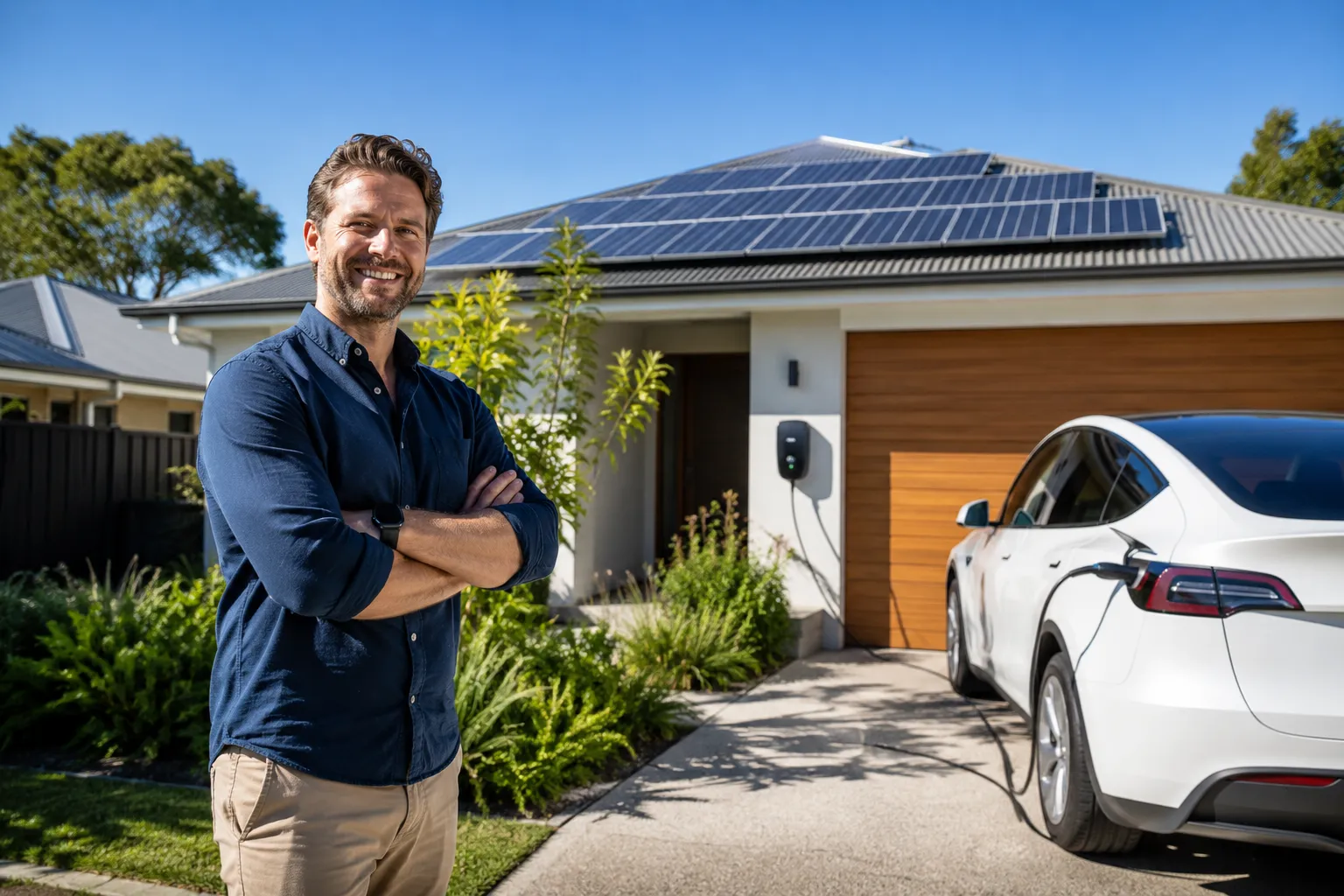
Green Loans Guide
Solar, batteries, EVs and home upgrades financed.

Car Loan Guide
Compare car loan rates and finance options.
Compare First Home Buyer Programs by State
Explore state-specific first home buyer grants, stamp duty concessions and Help to Buy caps across Australia.
Ready to compare?
Compare first home loan rates today.
find.deals™ refers your enquiry to our accredited Australian Credit Licensed broker partner. Comparison is free; the broker provides any credit assistance under their licence.