The Complete Australian Car Loan Guide 2026
Compare every car finance option - bank loans, dealer finance, novated leases, EV financing, and more. Save thousands with the right loan structure and negotiation strategy.

This guide is general information only - not credit, financial, or legal advice - and does not take your circumstances into account. For help tailored to your situation, submit an enquiry and our accredited Australian Credit Licensed broker partner can assist under their licence.
In this guide
- 01 What is a car loan?
- 02 Car financing options compared
- 03 Dealer finance vs bank loan
- 04 Novated leases explained
- 05 EV financing & green car loans
- 06 How much car can I afford?
- 07 Balloon payments explained
- 08 Used car & private sale finance
- 09 Car loans for specific situations
- 10 Chattel mortgages for business
- 11 How to get the best deal
- 12 Frequently asked questions
What Is a Car Loan and How Does It Work in Australia?
A car loan is a secured or unsecured loan used to purchase a vehicle in Australia. For secured loans, the car itself serves as collateral, giving lenders a claim if you default. Typical terms range from 1-7 years, with current secured rates from 6.79%-10.79% p.a. and unsecured from 6.48%-12.79% p.a. The RBA cash rate sits at 4.35% - most secured car loan rates run roughly 2-4 percentage points above the cash rate.
Car loans in Australia are regulated by ASIC under the National Consumer Credit Protection Act. Every lender must hold an Australian Credit Licence, perform responsible lending checks, and display a comparison rate alongside the advertised rate. The comparison rate includes most fees and charges, giving you a more accurate picture of the true cost. In 2026, competition between banks, online lenders, and dealer finance providers means rates vary significantly - comparing live rates is essential.
Secured Car Loan
The car serves as collateral, giving the lender security. This means lower rates - typically 6.79%-10.79% p.a. - but the lender can repossess the vehicle if you default on repayments. Compare secured rates.
Unsecured Car Loan
No collateral required - the lender has no claim on your vehicle. Rates are higher at 6.48%-12.79% p.a. but offer more flexibility, including private sale purchases and older vehicles. See unsecured personal loan options.
Loan Terms
Car loan terms range from 1-7 years. The most popular term is 5 years, balancing affordable monthly repayments with reasonable total interest cost. Shorter terms save interest but increase monthly payments.
The comparison rate is your most important tool when evaluating car loans. A loan advertised at 5.99% p.a. with a $400 establishment fee and $15/month account-keeping fee may have a comparison rate of 7.50% - making it more expensive than a loan advertised at 6.99% with no fees and a comparison rate of 7.10%. Always compare the comparison rate, and verify what fees are included. Our live comparison table shows both rate and comparison rate side-by-side.
What Are My Options for Financing a Car?
There are seven main ways to finance a car purchase in Australia. Each has distinct advantages depending on your situation.
| Option | How It Works | Typical Rate | Pros | Cons | Best For |
|---|---|---|---|---|---|
| Bank Car Loan | Borrow from a bank, secured against the vehicle | 6.79%-10.79% | Competitive rates, trustworthy | Slower approval, stricter criteria | Buyers who want certainty and low rates |
| Dealer Finance | Finance arranged through the car dealership | 7.99-14.99% | Convenient, same-day approval | Higher rates, pressure tactics | Convenience seekers without pre-approval |
| Online Lender | Digital-first lenders with streamlined processes | 6.79%-10.79% | Fast approval, competitive rates | No branches, less personal service | Tech-savvy borrowers who want speed |
| Novated Lease | Salary sacrifice through your employer | Varies | Tax savings, includes running costs | Complex, tied to employment | Employees earning $80K+ (especially EVs) |
| Chattel Mortgage | Business loan secured against vehicle for ABN holders | 5.49-9.99% | GST claim, depreciation, low rates | ABN required, business use only | Sole traders, businesses, contractors |
| Personal Loan | Unsecured borrowing for any purpose | 6.48%-12.79% | Flexible, no vehicle restrictions | Higher rates, lower borrowing limits | Older cars, private sales, flexible needs |
| BNPL / Interest-Free | Dealer-arranged interest-free deals over 1-5 years | 0% (conditions apply) | No interest if paid on time | Inflated price, deferred interest traps | Disciplined buyers who can repay on time |
Bank Car Loan
- How it works
- Borrow from a bank, secured against vehicle
- Pros
- Competitive rates, trustworthy
- Cons
- Slower approval, stricter criteria
- Best for
- Buyers wanting certainty and low rates
- Typical rate
- 6.79%-10.79%
Dealer Finance
- How it works
- Finance through the car dealership
- Pros
- Convenient, same-day approval
- Cons
- Higher rates, pressure tactics
- Best for
- Convenience seekers
- Typical rate
- 7.99-14.99%
Online Lender
- How it works
- Digital-first lenders, streamlined process
- Pros
- Fast approval, competitive rates
- Cons
- No branches, less personal service
- Best for
- Tech-savvy borrowers
- Typical rate
- 6.79%-10.79%
Novated Lease
- How it works
- Salary sacrifice through employer
- Pros
- Tax savings, includes running costs
- Cons
- Complex, tied to employment
- Best for
- Employees $80K+ (especially EVs)
- Typical rate
- Varies
Chattel Mortgage
- How it works
- Business loan for ABN holders
- Pros
- GST claim, depreciation benefits
- Cons
- ABN required, business use
- Best for
- Sole traders, businesses
- Typical rate
- 5.49-9.99%
Personal Loan
- How it works
- Unsecured borrowing, any purpose
- Pros
- Flexible, no vehicle restrictions
- Cons
- Higher rates, lower limits
- Best for
- Older cars, private sales
- Typical rate
- 6.48%-12.79%
BNPL / Interest-Free
- How it works
- Dealer-arranged interest-free deals
- Pros
- No interest if paid on time
- Cons
- Inflated price, deferred interest traps
- Best for
- Disciplined buyers
- Typical rate
- 0% (conditions)
Should I Get Dealer Finance or a Bank Loan?
Dealer finance is fast and convenient. Bank and online lender loans typically save thousands. The right choice depends on the rate gap and any cashback or extras on offer.
Getting pre-approved for a car loan before visiting a dealership is the single most powerful negotiation tactic. Pre-approval gives you a firm budget, a locked-in rate, and the ability to negotiate as a cash buyer. Dealer finance is convenient but almost always more expensive - typically 2-5% higher than bank or online lender rates.
| Factor | Dealer Finance | Bank Loan | Online Lender |
|---|---|---|---|
| Typical Rate | 7.99-14.99% | 6.79%-10.79% | 6.79%-10.79% |
| Approval Speed | Same day | 1-3 business days | 1-24 hours |
| Negotiation Power | Low - dealer controls the process | High - you are a cash buyer | High - you are a cash buyer |
| Hidden Fees | Common - warranty, insurance add-ons | Transparent - clear fee schedule | Transparent - often fee-free |
| Private Sale | Not available | Usually available | Usually available |
| Cost on $40K / 5 yrs | ~$9,200 interest | ~$5,600 interest | ~$5,900 interest |
Dealer Finance
- Approval speed
- Same day
- Negotiation power
- Low
- Hidden fees
- Common add-ons
- Cost (5yr / $40K)
- ~$9,200 interest on $40K
- Typical rate
- 7.99-14.99%
Bank Loan
- Approval speed
- 1-3 business days
- Negotiation power
- High - cash buyer
- Hidden fees
- Transparent
- Cost (5yr / $40K)
- ~$5,600 interest on $40K
- Typical rate
- 6.79%-10.79%
Online Lender
- Approval speed
- 1-24 hours
- Negotiation power
- High - cash buyer
- Hidden fees
- Often fee-free
- Cost (5yr / $40K)
- ~$5,900 interest on $40K
- Typical rate
- 6.79%-10.79%
Negotiation Tips
Get pre-approved first - walk into the dealer knowing your rate and budget
Negotiate the price first, then discuss finance - never let the dealer bundle both
Say no to add-ons - extended warranties, paint protection, and fabric protection are high-margin dealer products
Ask for the comparison rate - dealers must disclose it but may not volunteer it
What Is a Novated Lease and Should I Get One?
Novated leases let you salary-sacrifice a car using pre-tax dollars. For employees earning $80,000+ - especially on EVs eligible for FBT exemption - savings can run into thousands per year.
A novated lease is a salary sacrifice arrangement where your employer deducts car payments and running costs from your pre-tax salary. This reduces your taxable income, saving you money. In 2026, the FBT exemption for electric vehicles under $91,387 makes novated leases particularly powerful for EV purchases - potentially saving $3,000-$15,000+ per year.
The novated lease involves a three-way agreement between you, your employer, and the leasing company. Your employer makes lease payments from your pre-tax salary, reducing your taxable income. Running costs - fuel, insurance, registration, servicing, and tyres - can also be included in the salary sacrifice package. If you change employers, the lease transfers to you or your new employer.
| Scenario | $60K Salary | $80K Salary | $100K Salary |
|---|---|---|---|
| Tax Bracket | 32.5% | 32.5% | 37% |
| Annual Lease Cost ($50K EV) | ~$12,500 | ~$12,500 | ~$12,500 |
| Tax Saving (EV, FBT exempt) | ~$4,063/yr | ~$4,063/yr | ~$4,625/yr |
| Tax Saving (Petrol car, with FBT) | ~$1,200/yr | ~$1,500/yr | ~$2,100/yr |
| Novated Lease Recommended? | EVs only | Yes, especially EVs | Yes, strong benefit |
$60K Salary
- Tax bracket
- 32.5%
- EV tax saving (FBT exempt)
- ~$4,063/yr
- Petrol car tax saving
- ~$1,200/yr
- Recommended?
- EVs only
$80K Salary
- Tax bracket
- 32.5%
- EV tax saving (FBT exempt)
- ~$4,063/yr
- Petrol car tax saving
- ~$1,500/yr
- Recommended?
- Yes, especially EVs
$100K Salary
- Tax bracket
- 37%
- EV tax saving (FBT exempt)
- ~$4,625/yr
- Petrol car tax saving
- ~$2,100/yr
- Recommended?
- Yes, strong benefit
End-of-Lease Options
Pay the residual value and own the car outright
Refinance the residual into a new lease term
Sell the car, pay the residual, and start a new lease
How Do I Finance an Electric Vehicle in 2026?
EV financing offers unique advantages including green car loan discounts, FBT exemptions, and dramatically lower running costs.
Green car loans offer 0.5-1% lower interest rates for electric and plug-in hybrid vehicles - currently 6.29%-15.00% p.a. on the EV/Hybrid tab vs 6.79%-10.79% for a standard secured car loan. Combined with the federal FBT exemption for EVs under $91,387 (via novated lease), fuel savings of approximately $1,120 per year, and lower maintenance costs, the total cost of ownership for an EV is now competitive with or cheaper than equivalent petrol vehicles in 2026. Compare live EV car loan rates, or see green personal loans if you also need to finance home charging or solar.
Green Car Loan Benefits
- 6.29%-15.00% typical rate - green car loans from banks and online lenders offer 0.5-1% off standard rates for BEVs and PHEVs
- FBT exemption - EVs under $91,387 are exempt from Fringe Benefits Tax via novated lease in 2026
- Fuel savings ~$1,120/year - based on 15,000km/year, electricity vs petrol
- Lower maintenance - no oil changes, fewer brake replacements, simpler drivetrain
Total Cost of Ownership: EV vs Petrol (5 Years)
| Cost Category | EV ($50K) | Petrol ($40K) | Difference |
|---|---|---|---|
| Purchase Price | $50,000 | $40,000 | +$10,000 |
| Loan Interest (5yr, 6.5%) | $8,750 | $7,000 | +$1,750 |
| Fuel / Electricity | $2,800 | $8,400 | -$5,600 |
| Servicing | $1,500 | $4,000 | -$2,500 |
| Insurance & Rego | $10,000 | $9,000 | +$1,000 |
| Total 5-Year Cost | $73,050 | $68,400 | +$4,650* |
EV ($50K) - 5yr Total: $73,050
- Purchase
- $50,000
- Loan interest
- $8,750
- Electricity
- $2,800
- Servicing
- $1,500
- Insurance & rego
- $10,000
Petrol ($40K) - 5yr Total: $68,400
- Purchase
- $40,000
- Loan interest
- $7,000
- Fuel
- $8,400
- Servicing
- $4,000
- Insurance & rego
- $9,000
*The gap narrows significantly with a novated lease (FBT savings of $4,000+/yr for EVs) and state incentives. With novated lease, an EV is typically cheaper than a petrol car over 5 years.
Battery Warranty Considerations: Most EV manufacturers offer 8-year / 160,000km battery warranties. When financing an EV, choose a loan term that falls within the warranty period. If you are concerned about battery degradation, ensure your insurance covers battery replacement. Real-world data shows most EV batteries retain 80%+ capacity after 10 years.
Car Loan Calculators
Estimate your car loan repayments and see the impact of balloon payments before you apply.
Car Loan Repayment Calculator
Calculate your monthly car loan repayments and total interest paid over the loan term.
Monthly repayment
$0
Total interest
$0
Illustrative only, not an offer or quote.
Balloon Payment Calculator
Compare monthly repayments and total cost with and without a balloon payment on your car loan.
Without Balloon
Monthly
$0
Total interest
$0
With Balloon
Monthly
$0
Total interest
$0
Illustrative only, not an offer or quote.
We compare Australia's leading car loan lenders
(to save you the drive-around)












Ready to compare car loan rates?
Compare car loans from banks, online lenders, and specialist providers. Get pre-approved in minutes.
How Much Car Can I Afford?
Use the 10-15% rule: your total car costs should not exceed 10-15% of your gross monthly income.
The purchase price is only part of the equation. Total cost of ownership includes loan repayments, comprehensive insurance ($1,200-$2,500/yr), registration ($300-$900/yr), fuel or electricity ($560-$1,680/yr), servicing ($300-$800/yr), and depreciation. Budget for all of these before deciding how much to borrow.
| Gross Salary | 10% Budget (Monthly) | 15% Budget (Monthly) | Max Car Price (5yr loan) | Comfortable Car Price |
|---|---|---|---|---|
| $60,000 | $500/mo | $750/mo | ~$30,000 | ~$20,000 |
| $80,000 | $667/mo | $1,000/mo | ~$42,000 | ~$30,000 |
| $100,000 | $833/mo | $1,250/mo | ~$55,000 | ~$40,000 |
$60K Salary
- 10% budget
- $500/mo
- 15% budget
- $750/mo
- Max car price (5yr)
- ~$30,000
- Comfortable price
- ~$20,000
$80K Salary
- 10% budget
- $667/mo
- 15% budget
- $1,000/mo
- Max car price (5yr)
- ~$42,000
- Comfortable price
- ~$30,000
$100K Salary
- 10% budget
- $833/mo
- 15% budget
- $1,250/mo
- Max car price (5yr)
- ~$55,000
- Comfortable price
- ~$40,000
These figures assume a 7% interest rate and include estimated running costs. The "comfortable" price accounts for insurance, registration, fuel, and maintenance within the 10-15% budget. If you have other significant debts (mortgage, personal loans), aim for the lower end. Lenders also use their own serviceability calculations - your approved amount may differ.
What Are Balloon Payments and Should I Use One?
A balloon payment lowers your monthly repayments but leaves a large lump sum due at the end of the term. They suit business buyers and short-term holders, but can backfire for everyday borrowers.
A balloon payment (or residual value) is a lump sum due at the end of your car loan. It reduces your monthly repayments during the loan term but means you owe a large final payment - typically 20-40% of the purchase price. You must either pay the balloon, refinance it, or sell the car to cover it.
| $40,000 Car Loan (5yr, 7%) | No Balloon | 20% Balloon ($8K) | 30% Balloon ($12K) |
|---|---|---|---|
| Monthly Repayment | $792 | $680 | $624 |
| Monthly Saving | - | $112/mo | $168/mo |
| Balloon Due at End | $0 | $8,000 | $12,000 |
| Total Interest Paid | $7,520 | $8,800 | $9,440 |
No Balloon
- Monthly repayment
- $792/mo
- Monthly saving
- -
- Balloon due at end
- $0
- Total interest
- $7,520
20% Balloon ($8K)
- Monthly repayment
- $680/mo
- Monthly saving
- $112/mo less
- Balloon due at end
- $8,000 due
- Total interest
- $8,800
30% Balloon ($12K)
- Monthly repayment
- $624/mo
- Monthly saving
- $168/mo less
- Balloon due at end
- $12,000 due
- Total interest
- $9,440
When to Use a Balloon
- You need lower monthly cash flow now
- You plan to sell or trade in before the balloon is due
- You are confident you can save the balloon amount
- Business use - balloons are common in chattel mortgages
When to Avoid a Balloon
- You cannot guarantee you will have the lump sum
- The car may depreciate below the balloon value
- You want to own the car outright at end of term
- You want to minimise total interest paid
How Do I Finance a Used Car or Private Sale?
Used and private-sale finance comes with extra checks - vehicle age limits, PPSR searches, and pre-purchase inspections - but the right lender makes the process straightforward.
Used car loans are available from most lenders, but rates increase with the vehicle's age and mileage. Cars under 5 years old attract rates close to new-car loans. Cars 5-10 years old typically add 1-3% to the rate. Private sale financing is more limited - not all secured lenders allow it, and you will need a PPSR check to ensure the vehicle is free of encumbrances.
How Age & Mileage Affect Rates
- 0-3 years old - rates similar to new car loans (5.99-9.99%)
- 3-7 years old - slightly higher rates (7.99-12.99%), shorter max terms
- 7+ years old - limited secured options, may need unsecured (9.99-19.99%)
Private Sale Documentation
- PPSR check - verify no outstanding finance or encumbrances (~$2)
- Written receipt - include VIN, sale price, date, both parties' details
- Pre-purchase inspection - independent mechanic inspection ($150-$300)
- Service history - full service records increase lender confidence
A PPSR check is the single most important step when buying a used car privately. If you buy a vehicle that has existing finance owing, the lender has a legal right to repossess it - even though you paid for it in good faith. The check costs approximately $2 and takes minutes. Never skip this step, regardless of how trustworthy the seller appears.
What About Car Loans for Specific Situations?
Different circumstances call for different approaches. Here is what to know for common scenarios.
Young & First-Time Buyers
Limited credit history makes approval harder. Build credit first with a small credit card. Start with a cheaper car and a shorter loan term. Having a co-signer (parent or partner) can improve approval chances and unlock better rates. Some lenders specifically cater to first-time buyers.
Ride-Share & Gig Drivers
If you drive for Uber, DiDi, or similar platforms, consider a chattel mortgage for tax benefits (interest and depreciation are deductible for business use). Ensure the vehicle meets platform requirements. Some lenders offer specific ride-share car loans with higher mileage allowances.
Self-Employed Borrowers
Self-employed applicants typically need 2 years of tax returns and business financial statements. Some lenders offer low-doc car loans with higher rates. A chattel mortgage provides tax benefits if the car is used for business. Keep your ABN active and BAS lodged up to date to strengthen your application.
Bad Credit Borrowers
Specialist lenders like Pepper Money and Liberty Financial offer car loans for borrowers with defaults, judgments, or low credit scores. Expect rates of 12-25% p.a. Strategies to improve your outcome: offer a larger deposit (20%+), choose a cheaper vehicle, opt for a secured loan, and provide evidence of improved financial behaviour.
What Is a Chattel Mortgage and How Does It Work?
A chattel mortgage is the most common business car finance option in Australia. It lets you claim GST upfront and depreciate the vehicle, making it more tax-effective than a standard car loan.
A chattel mortgage is a business car loan where you own the vehicle from day one while the lender holds a mortgage over it as security. It is available to ABN holders - sole traders, partnerships, and companies - and offers significant tax advantages including GST claims on the purchase price, interest deductions, and depreciation.
Tax Benefits for ABN Holders
- Claim GST - claim the GST component on the purchase price (up to $5,885 on a $64,741 vehicle)
- Interest deductions - all loan interest is tax deductible for business use
- Depreciation - claim depreciation over the effective life of the vehicle
- Running costs - fuel, insurance, rego, and servicing all deductible for business portion
Chattel Mortgage vs Standard Car Loan
- Ownership - you own the vehicle immediately (standard car loan: same)
- GST credit - chattel mortgage allows GST claim (standard: no)
- Balloon option - both allow balloon/residual payments
- ABN requirement - chattel mortgage requires ABN (standard: no ABN needed)
For sole traders using a vehicle 50%+ for business, a chattel mortgage typically provides the best overall outcome due to the combination of competitive rates (5.49-9.99%), GST recovery, and ongoing tax deductions. Consult your accountant to determine the optimal finance structure for your specific tax situation.
Compare car finance options
Compare car loans, novated leases, and chattel mortgages from Australia's leading lenders.
How to Get the Best Car Loan Deal: Step-by-Step
A clear, ordered process saves the average buyer thousands. Get pre-approved before you set foot in a dealership and negotiate the car price separately from finance.
Follow these seven steps to ensure you get the best possible car loan deal. The order matters - checking your credit and getting pre-approved before visiting a dealership is the foundation of a strong negotiating position.
Check your credit score
1 dayRequest your free credit report from Equifax or CreditSavvy. A score of 700+ qualifies you for the best rates. If your score is lower, consider spending 30-90 days improving it - pay down credit card balances, correct any errors, and avoid new credit applications.
Determine your budget
1 hourApply the 10-15% rule: total car costs (repayments + insurance + rego + fuel + maintenance) should not exceed 10-15% of your gross monthly income. Factor in depreciation - a $40,000 car may be worth $25,000 after 5 years. Do not stretch to buy more car than you can comfortably afford.
Get pre-approved
1-3 daysApply for pre-approval from 2-3 lenders (banks, online lenders) before visiting any dealership. Pre-approval locks in a rate for 30-90 days, gives you a firm budget, and positions you as a cash buyer with stronger negotiation leverage. Use find.deals™ to compare options.
Shop the car, not the finance
1-2 weeksWith pre-approval in hand, focus entirely on negotiating the lowest purchase price. Never discuss finance or monthly payments with the dealer until the price is agreed. If the dealer asks about your budget, say you are paying cash. Negotiate the trade-in value separately from the purchase price.
Compare all finance options
1-2 hoursOnce you have agreed on a price, compare your pre-approved rate against any dealer finance offers. Consider novated lease (if employed and earning $80K+), chattel mortgage (if ABN holder), and green car loan discounts (if buying an EV). The cheapest option depends on your tax situation.
Read the fine print
1 hourBefore signing, verify the comparison rate, early repayment fees, monthly account-keeping fees, balloon payment terms, mandatory insurance requirements, and total amount repayable over the full loan term. Ask about redraw facilities and extra repayment options. Do not sign under pressure - take the contract home if needed.
Settle and drive
1-3 daysFinalise the loan, arrange comprehensive insurance (required for secured loans), complete a PPSR check for used vehicles, and settle the purchase. Set up direct debit repayments and consider making extra repayments from the start - even an extra $50/month can save hundreds in interest and years off the loan.
Frequently Asked Questions
Everything you need to know about car loans in Australia.
Car Loan Basics
Eligibility & Approval
Features & Fees
Buying & Selling
EV & Leasing Options
Related Guides & Tools

Home Loan Guide
Complete guide to getting a home loan in Australia.

Refinancing Guide
How to switch and save on your existing home loan.

First Home Buyers Guide
Government grants, schemes, and tips for first-timers.

Green Home Loans Guide
Lower rates for energy-efficient homes.

Personal Loan Guide
Compare personal loan rates from leading lenders.
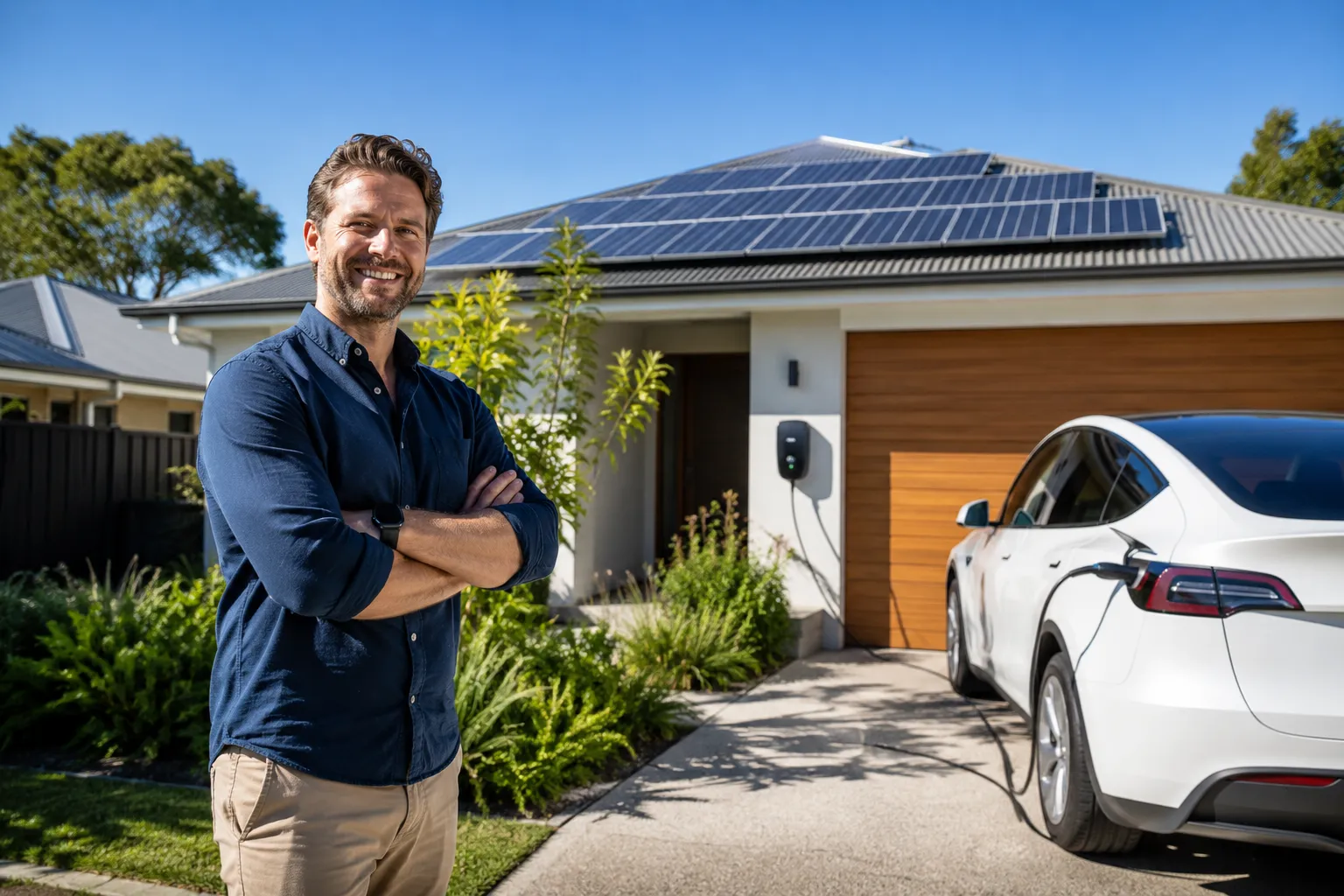
Green Loans Guide
Solar, batteries, EVs and home upgrades financed.
Compare Car Loans by State
Explore state-specific car loan rates, EV incentives and stamp duty rules across Australia.
Ready to compare?
Start your enquiry today.
find.deals™ refers your enquiry to our accredited Australian Credit Licensed broker partner. Comparison is free; the broker provides any credit assistance under their licence.